3 days ago | Written By Sarah
Mitchell
64-year-old potter in Vermont has kept the
same clay ritual in her garden for 5 years,
and even in the worst heat, the bees never
stopped coming.
Most people think pesticides are the
biggest threat
to bees. But millions die because of
something far simpler. This Vermont ceramic
artist figured that out 5 years ago. Every
spring since, she puts the same handmade
clay bowls throughout her flower beds before
the summer heat sets in.
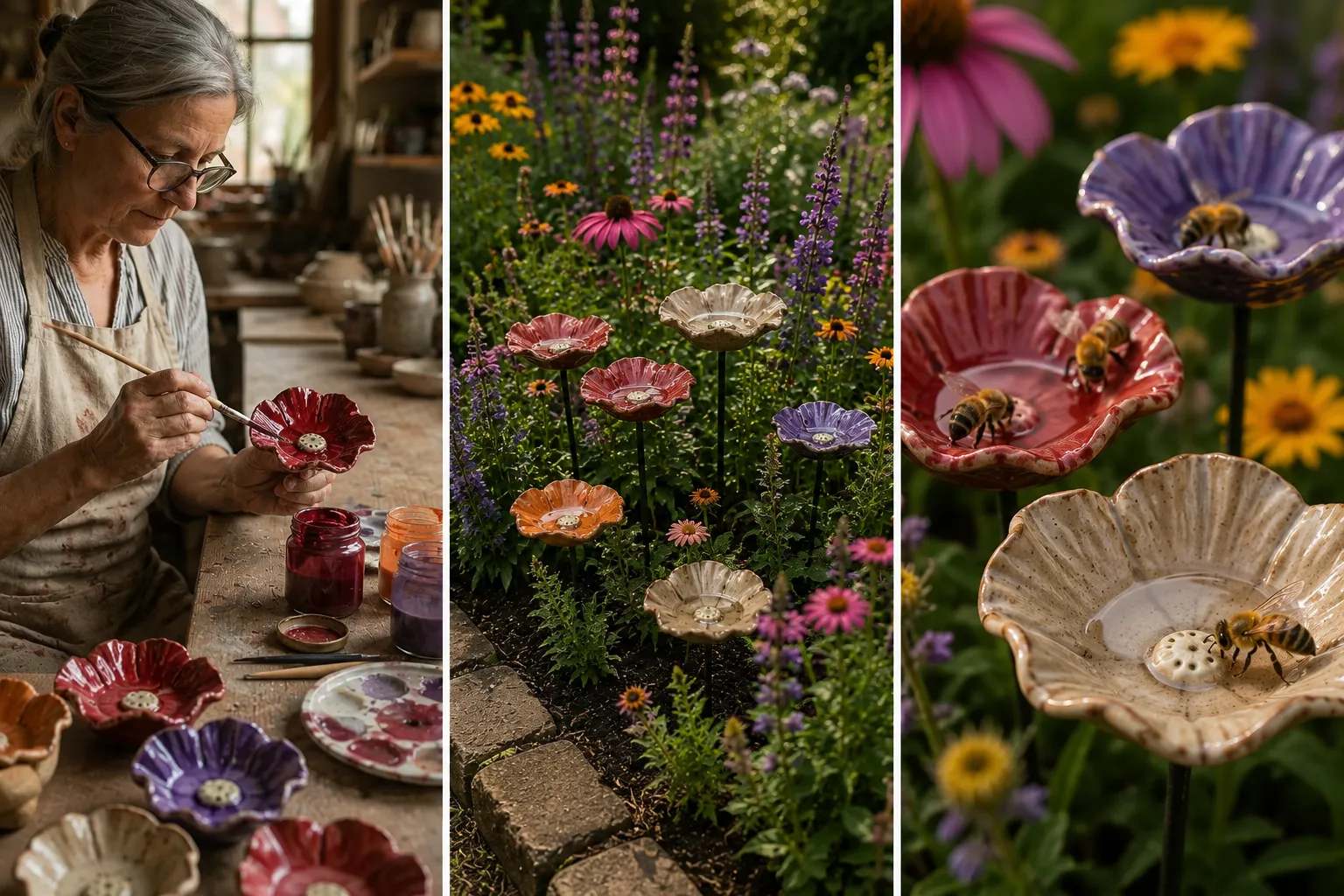
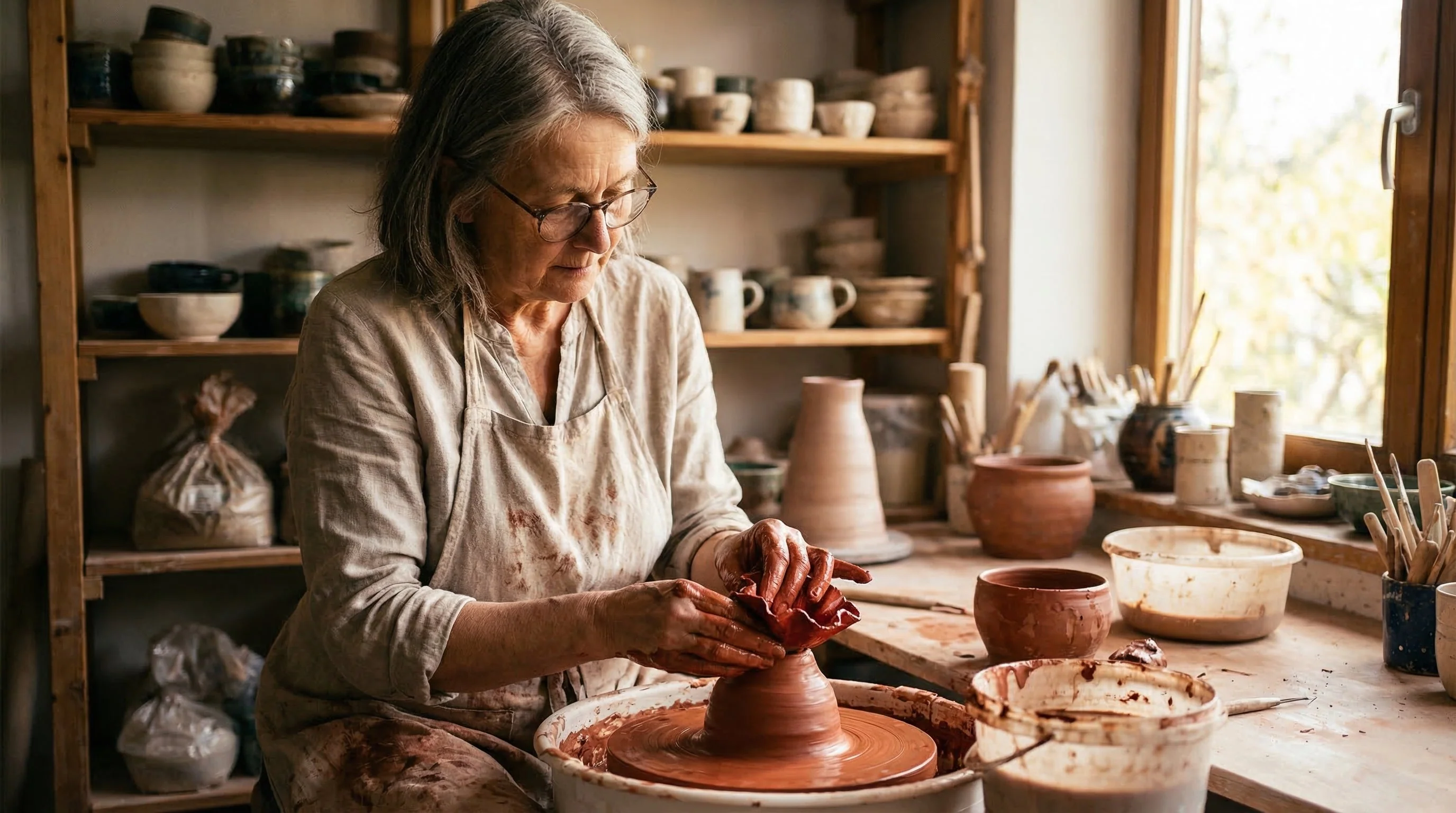
Dorothy "Dot" Callaway still hand-paints
every ceramic blossom. "That's not a
flaw," she says. "That's proof it was made
by a person." The gently textured rim
gives bees a safe place to land and drink,
while tucked among real flowers, they
become part of the garden. Within just two
days, the bees seem to think so too.
When was the last time you heard your garden truly
come alive? Every summer, bees drifted from bloom
to bloom, filling the air with a familiar hum.
For many people, that sound has quietly
disappeared.
Most people think pesticides are the biggest
threat to bees. That's only half the story. Every
summer, millions don't die from poison,
they die of thirst.
They spend their final hours searching for
something every living creature needs,
and many never make it back to the hive.
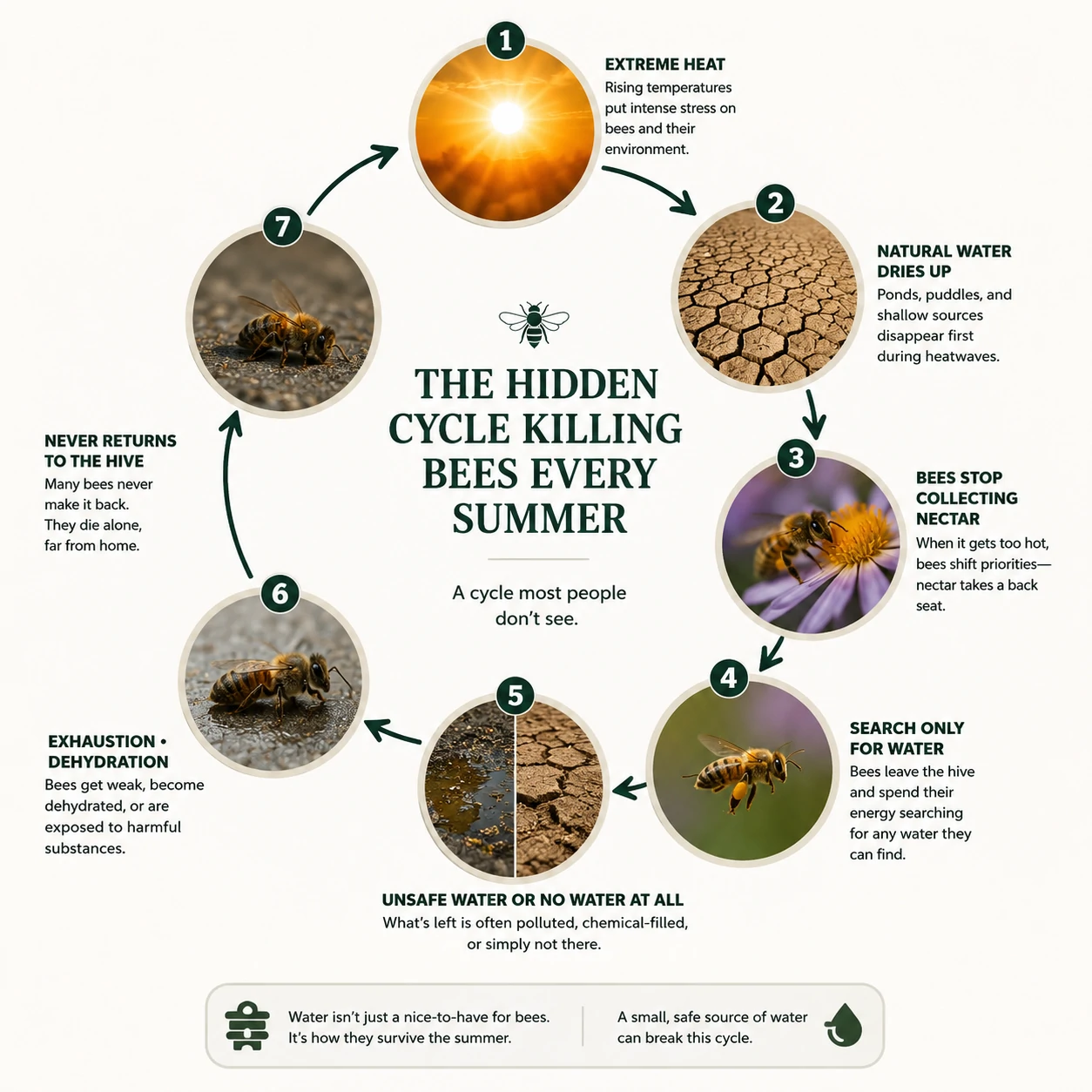
Why So Many Bees Never Make It Home
When summer temperatures climb, bees stop
collecting nectar and begin
searching for water
. As natural sources dry up, they're forced to fly
farther than usual, often settling for roadside
puddles, rain gutters, or contaminated runoff.
Many become exhausted before finding clean
water. Others simply die of thirst before ever
making it back to the hive.
U.S. honey bee colonies
lost
in 2023–24.
Water a healthy hive may need each
day during
extreme
heat.
Puddle water samples near farmland
contained at least one
pesticide
.
Crops that feed
90% of the world's population
depend on bee pollination.
It Was Never Supposed To Become A Bee Story.
Everyone in Woodstock calls her Dot. Nearly
fifteen years ago, her husband Ray, a lifelong
beekeeper, gave her a pottery class for her
birthday.
"Most husbands bring flowers," she laughs. "Mine
taught me how to make one that would last
forever."
Dot fell in love with pottery. Every year after
that, she hand-shaped another ceramic poppy for
Ray's garden, until the flowers blended almost
seamlessly with the real blooms.
Then one unusually hot summer, Ray poured sugar
water into one of the ceramic flowers.
The next morning, three bees were drinking from
it.
"That's when I started really watching,"
Dot says. "Not just making pottery.
Watching where they landed. What was too
deep. What was too shallow. How long they
stayed."
That single moment turned into fifteen summers of
observation. Year after year, Dot made tiny
adjustments to every bloom, guided not by
guesswork, but by the bees themselves.
"To Me, They Looked Identical. To A Bee, They
Couldn't Be More Different."
Dot pulls two bowls from the shelf, generation
one, and today's. "This one looks right," she
says, tapping the older piece. "But the bees
slipped off it. Or got in too deep and drowned."
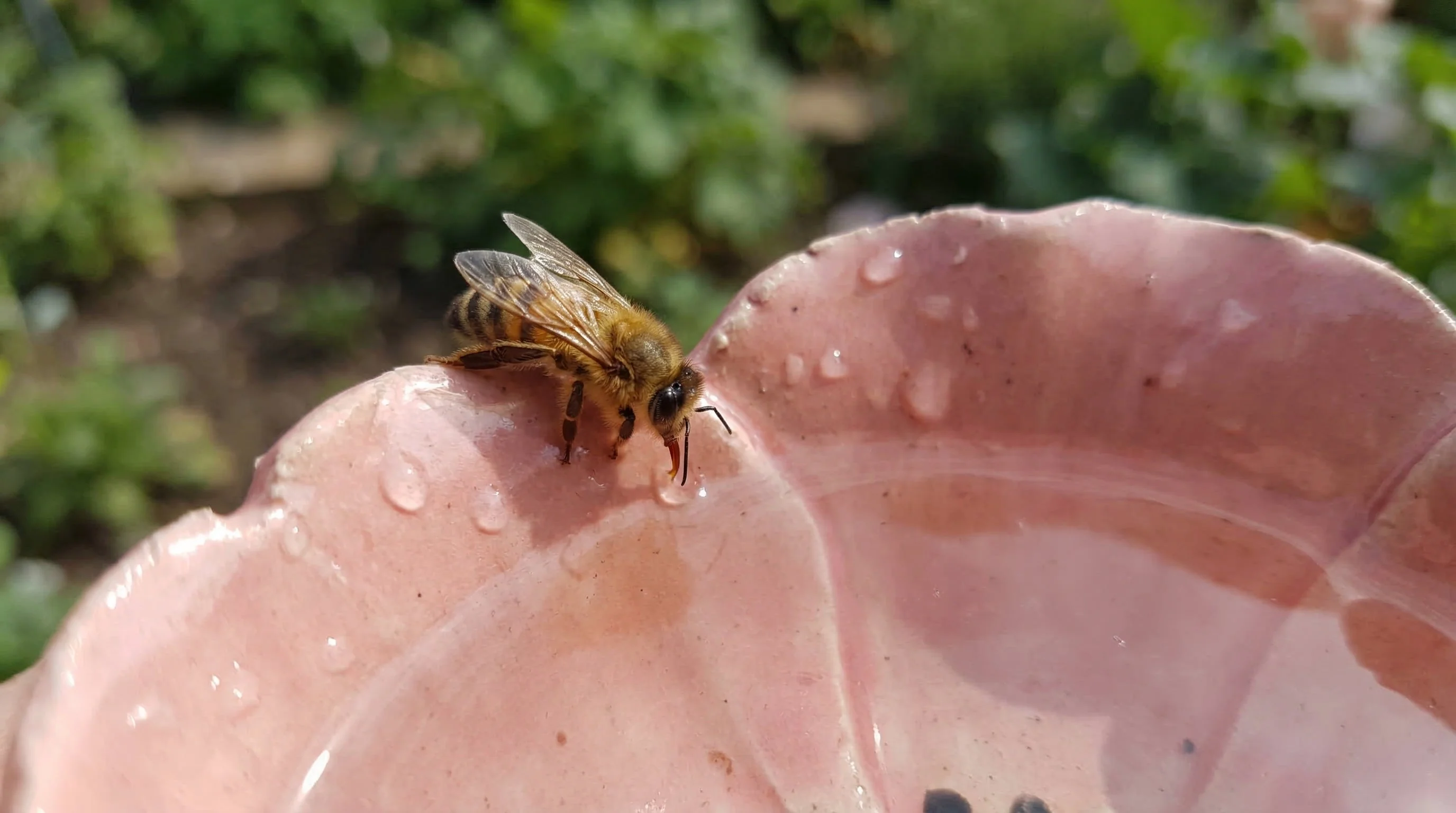
She picks up the newer version. Rim curved
slightly inward, glaze rougher. "Took three more
versions. A bird can stand in the water. A bee
can't, she has to land on the edge and lean in.
Too smooth, she slides. Too deep, she drowns.
What Dot Learned In 15 Years Of Watching
🐝
Shape is the invitation.
An open ceramic bowl among real flowers
reads as a signal: land here.
🐝
Shade triples the water's
life.
In a flower bed, it evaporates 3 times
slower than on pavement.
🐝
Every color gets noticed.
Bees see the spectrum differently, a
mixed set catches more eyes.
🐝
They remember safe places.
Once bees trust a water source, they
come back.
🐝
Ten seconds, once a morning.
No filters, no pumps, nothing to plug
in.
🐝
The right depth saves lives.
Too deep, they drown. Too shallow, they
slide away.
🐝
Not just for bees.
Butterflies and small birds use the same
shallow rim.
🐝
Every curve has a purpose.
Fifteen years of trial and error shaped
each one.
🐝
Clean water is the real difference.
Puddles carry oil and pesticide. A
garden hose doesn't.
🐝
Bee-friendly.
Mosquito-unfriendly.
Too shallow for larvae to develop.
They Disappear Into Your Garden. The Bees
Do The Rest.
No pond to dig. No dish baking on hot concrete.
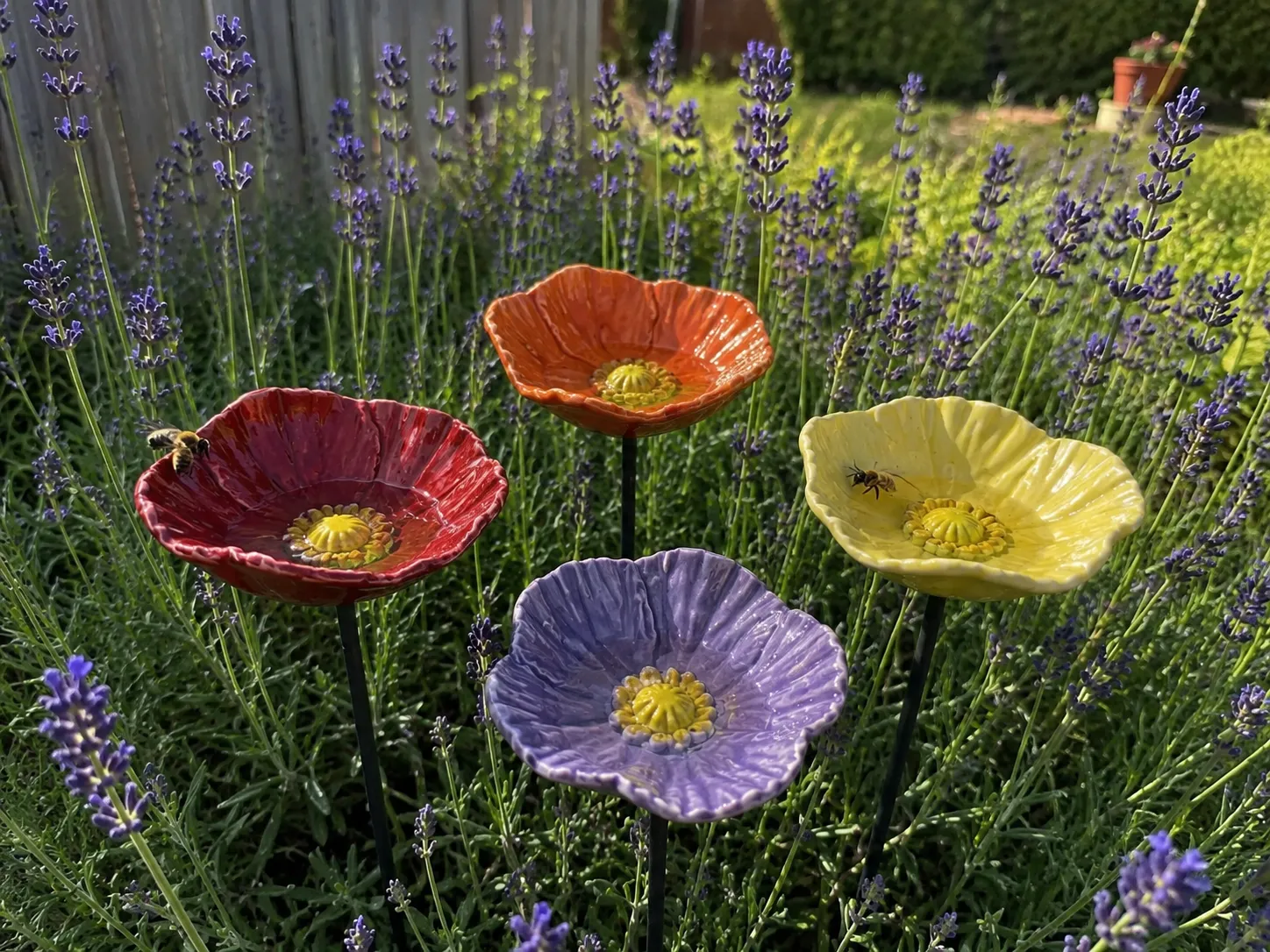
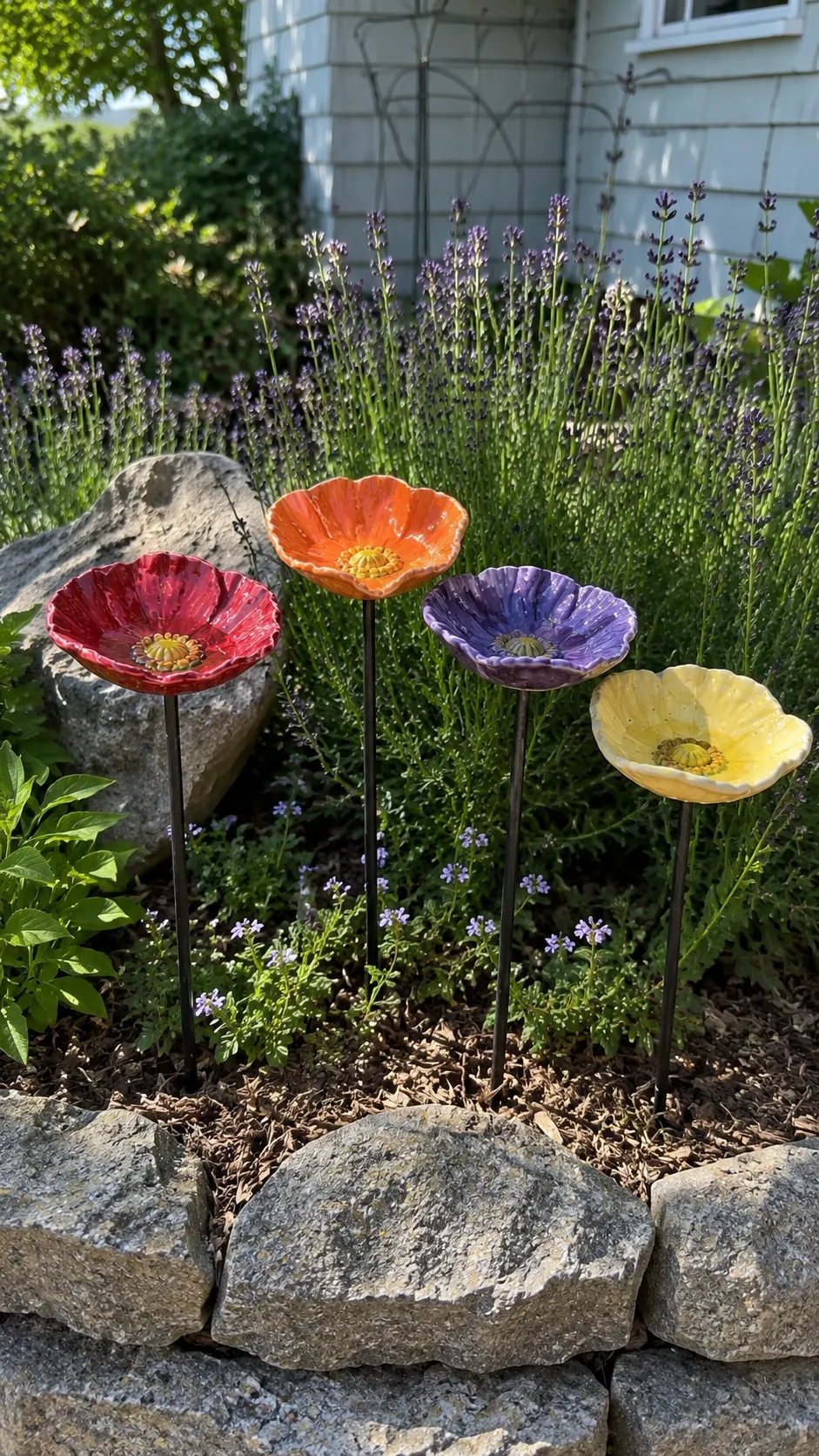
Just four ceramic flowers on thin stakes. Place
them among your blooms, top them off during your
regular watering, and bees will find them, and
keep coming back.
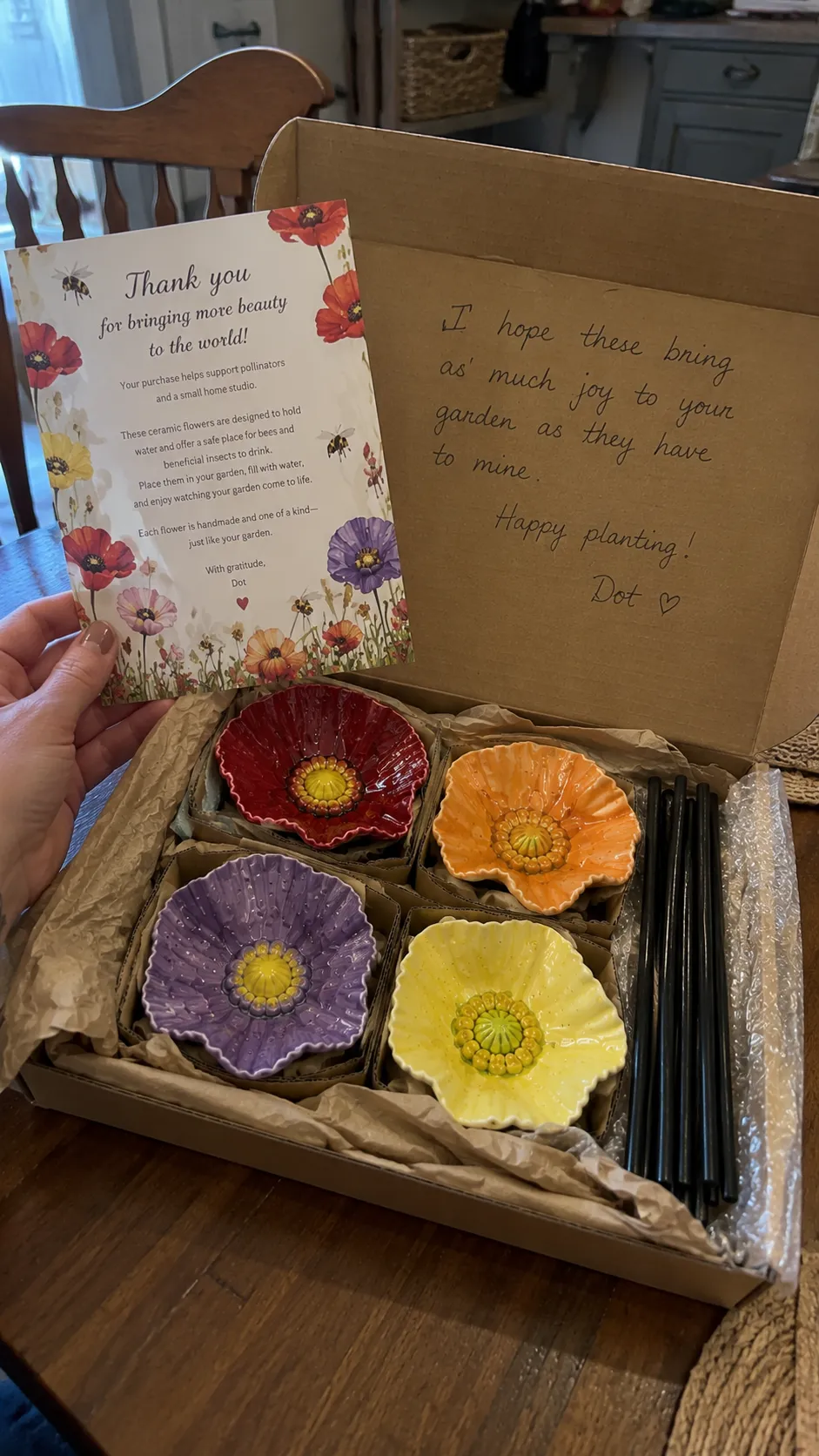
Four bowls, four colors: pink, orange,
purple, pale yellow. Dot glazes every batch
by hand, so no two sets ever come out the
same. This is what's left of this winter's
run.
Designed by bees
– refined over 15 years of
observation to help bees land and
drink safely.
Handcrafted by Dot
– every flower shaped, glazed, and
fired by hand.
Bee-safe depth
– shallow enough to prevent
drowning, deep enough to stay
useful.
Garden stake included
– lifts the flower into the blooms
where bees naturally forage.
Easy daily refill
– fresh water in about ten
seconds, right from the watering
can.
Open blossom design
– easy for bees to spot among real
flowers.
4-piece handcrafted set
– four one-of-a-kind ceramic
flowers in assorted colors.
UPDATE:
Dot and Ray are leaving Woodstock this fall.
Instead of packing away the remaining
flowers from this winter's batch, they hope to see every one of them doing
what they were made to do, helping bees
through another hot summer.That's why the remaining sets are now
50% off. Once this winter's batch is gone,
it's gone for good.
See what's still available
>>
The Bees Set The Schedule. Not The
Calendar.
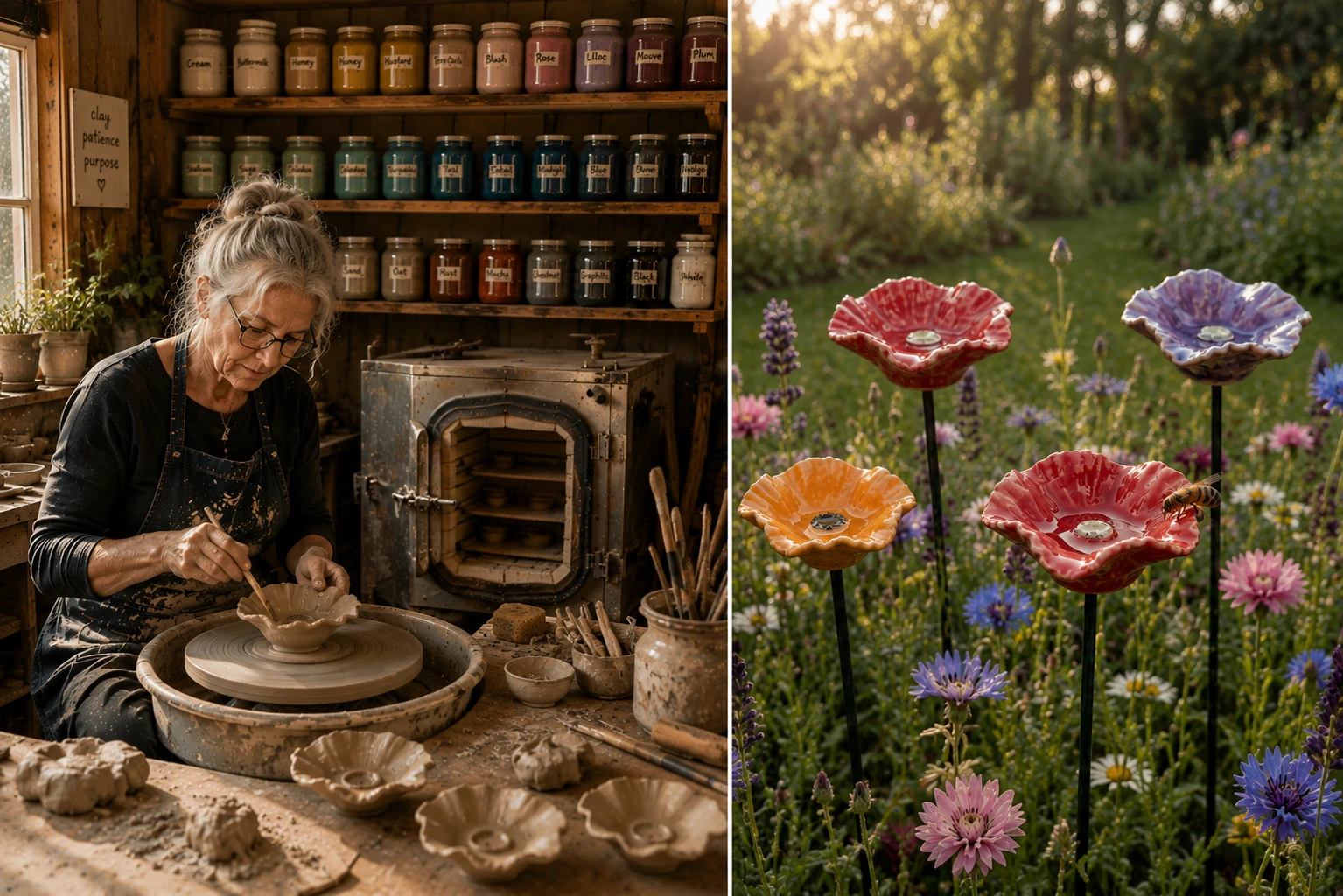
Dot doesn't wake up every winter thinking about
how many flowers she needs to make.
She spends the cold months shaping clay in the
studio, then leaves the wheel behind to watch what
the bees teach her in real gardens. Everything you
see here was made during those winter months. Once
these pieces find homes, the wheel stays quiet
until fall.
Her daughter, Emily, noticed neighbors asking the
same question every summer:
"Where can I get one?"
So she quietly built a small online shop, not to
grow the business, but simply so the flowers she
was already making could find homes beyond
Woodstock.
Dot still smiles whenever someone brings up the
website.
"I don't really understand the internet.
I just fill the flowers and watch who
comes."
From Gardens Across The Country
Over 5,900 sets
sold — rated exclusively by verified
buyers
Every blossom takes shape one at a time on
the wheel. "You can feel when the form is
right — it's in the hands."
"I put them in the lavender bed and
couldn't believe how fast the bees
showed up. The quality is really
something — you can tell this isn't
mass-produced."
"Got these for my mother-in-law who
keeps a pollinator garden. She cried
when she opened them. Said they
reminded her of the poppies in her
grandmother's yard back in Maine. That
alone was worth every penny."
"Beautiful, delicate colors and
clearly handmade — you can see the
little imperfections that make each
one unique. One of the metal stakes
was slightly shorter than the others,
but honestly it doesn't matter at
all."
30-Day Satisfaction Guarantee
Put the bowls in your garden. Give it
30 days. If the bees never show up, or
you just don't love how they look, send
them back. No questions, no fine
print.
Dot spent fifteen years giving these
away for free. Charging for them at
all still feels strange to her. A
no-risk return is the least this could
come with.
Every Garden Deserves To Hum Again.
Fifteen summers. Hundreds of flowers. A little
better every year.
"I know how a bee lands now," Dot says. "I know
the right depth, the right shade, and when the
water's just right. Once you notice the little
things, you can't stop noticing them."
If your garden has gotten a little quieter too...
Four flowers and ten seconds every morning.
That's all it takes.
The set includes 4 handmade ceramic poppy
bowls on metal stakes in random colors
(pink, orange, purple, pale yellow).
Suitable for garden, balcony, and patio.
Free shipping. Delivery in 5–7 business
days.